Frankston City Council offers its residential households a Food Organics and Garden Organics Collection Service (green lidded FOGO Bin). This service helps reduce the amount of food organics sent to landfill.
When food organics go to landfill, it makes methane gas, which is much worse for the environment than carbon dioxide.
Instead, Food Organics and Garden Organics (FOGO) put in your FOGO bin is turned into nutrient-rich compost. This compost is used by farmers and gardeners across Victoria to grow more food and plants.
That’s why it’s really important to only put food organics and garden organics in your FOGO bin. What you put in the bin helps make the soil that grows your food!
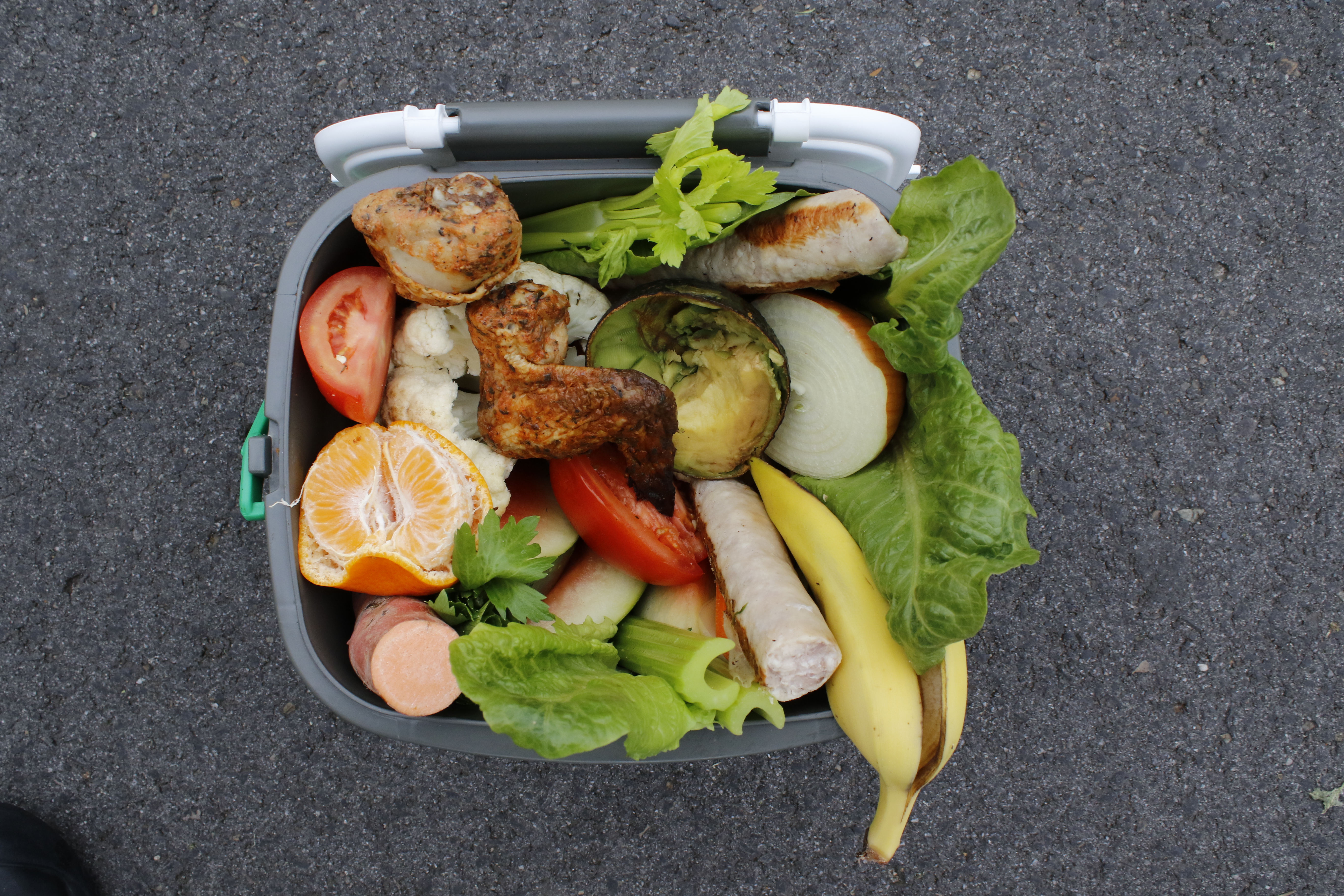
Our green lidded FOGO bin service is collected fortnightly and is an optional 'user pays' service.
As part of the FOGO bin service a free caddy and 6 months' supply of liners will be delivered with your new FOGO bin.
Order a food and garden waste bin online via Order a new or additional waste service - Frankston City Council
Call us on 1300 322 322 to request a bin.
A kitchen caddy is a container that makes it easy to collect food scraps while you’re cooking in the kitchen. You can then tip the scraps into your green-lidded FOGO bin. You can use the Council kitchen caddy or use any container you like.
When you first order a FOGO bin, a kitchen caddy and liners will be delivered with your green-lidded bin.
If you already have a FOGO bin but didn’t get a caddy, you can collect one. You can get a free kitchen caddy and a roll of 75 compostable liners. This is enough liners to last about 6 months if you change them every 2–3 days. You can pick up a new roll of liners every 6 months.
You can also use 1-2 sheets of paper towel or newspaper to line your caddy if you prefer, rather than compostable liners.
You can pick up your caddy and liners from:
Liners are also available to pick up at:
Make sure to bring proof that you are a resident of Frankston Council, like a rates notice or your driver’s licence. (Limit of one roll of compostable liners per household each six months and subject to availability).
Do not put plastic bags in your food and garden waste bins. Plastic bags can contaminate the soil that grows our food.
The preferred compostable liners are available from Council, free of charge.
If you choose to buy your own liners, you must ensure they are bright lime green colour, 100% corn starch compostable liners and certified compostable to standard AS4736. This will ensure that the processor can identify this is a certified compostable liner when sorting through the FOGO waste.
Yes
|
No
|
| Fruit, citrus and vegetables |
Plastic (including any kind of bio-degradable/degradable) |
| Meat scraps and bones |
Glass or metal |
| Dairy products |
Nappies or baby wipes |
| Seafood |
Vacuum dust |
| Tea leaves and coffee grounds |
Animal droppings |
| Egg shells |
Cling wrap, aluminium foil or baking paper |
| Food leftovers and scraps |
Cigarette butts or ashes |
| Cakes and desserts |
Dishcloths |
| Bread |
Coffee pods |
| Used paper towels, tissues and napkins |
Coffee cups (including compostable) |
| Grass clippings, weeds, tree clippings |
Cutlery (including compostable or bio-degradable) |
| Pasta, cereal and rice |
Food scraps that are wrapped or packaged |
FOGO bins are collected fortnightly, on alternate weeks of your yellow lidded mixed recycling bin.
Visit our bin collections page to find your next collection day.
When your FOGO waste (food and garden waste) is collected, it goes to a special place to be turned into compost.
Before this can happen, workers sort through the waste by hand to take out anything that doesn’t belong. Then the correct waste is shredded and processed in a way that helps it break down faster.
The compost that’s made is used by Victorian farmers and gardeners.
That’s why it’s really important to only put food scraps and garden waste in your FOGO bin. If the wrong things go in, it makes the job harder and can ruin the compost.
Take a look at how your FOGO is processed:
Get to know your FOGO bin service better with some of these frequently asked questions, which includes some tips and tricks!
Our FOGO bin service complements a home compost or worm farm because you can put food scraps into the FOGO bin that traditionally aren’t placed into a home compost or worm farm, like meats & bones, onions, citrus or dairy products.
Find out about our home compost rebate program here: Home Compost Rebate Program
FOGO perfectly complements composting systems to ensure diversion of food scraps and garden organics from your red-lidded general rubbish bin.
However, if you already manage food scraps and garden organics on your property, you can apply for your property to be an exception from the FOGO (food organics and garden organics) bin.
You need to demonstrate how you manage all organic material effectively on the property. We will ask you what happens to your food scraps, leftover cooked and uncooked food, and garden waste.
We accept a combination of composting, worm farm, mulching and household animals.
Please read below information to further assist before proceeding with your application.
- Your FOGO bin can complement your home composting system really well. You can place certain items into your FOGO bin that some home composting systems can’t accept, such as cooked foods, meat, bones, dairy and citrus.
- The FOGO service turns your garden organics and food organics into a high-quality compost that is used by Victorian Farmers as part of creating a circular economy.
- By placing our food scraps into the FOGO bin, we can reduce costs. It is cheaper for Council to process your food scraps in the FOGO bin compared to sending them to landfill in the red-lidded general rubbish bin due to increased landfill levy costs.
- Food scraps disposed in landfill create methane, a harmful greenhouse gas. Preventing food scraps going to landfill reduces our impact on the natural environment.
- We may occasionally review what’s in your red‑lidded bin, just to make sure food scraps and garden organics are being sorted correctly. If we spot any sorting mistakes, we can provide simple ideas and education to help you sort your waste correctly.
Please include photos of all management systems you have listed in your application. Where possible, please make sure the photos clearly show that the systems are in use. For example, if you have listed that you use a compost bin of some kind, we need to see compost inside the compost bin to know it is being used to compost your food scraps. Applications submitted without sufficient supporting photos may not be processed.
Apply online to request an exception