From waste to worth - Frankston City charts its circular future
Published on 20 May 2026
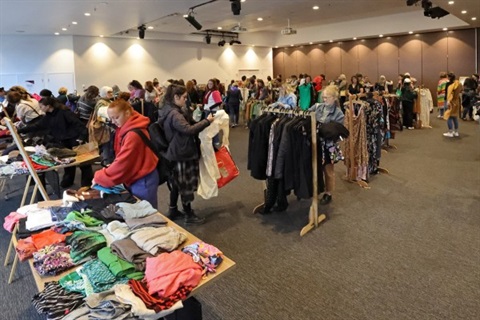
Council endorses new Circularity Roadmap to boost local innovation, reduce waste and position the city as a regional leader.
A window offcut repurposed for firewood. Glass turned into road base. A borrowed tool instead of buying new. A shampoo bottle refilled for the third time. Clothing swap meets at festivals.
Across Frankston City, small decisions like these are already quietly reshaping how people live, work, and do business. And now, they’re part of something bigger.
Frankston City Council has endorsed its new Circularity Roadmap, setting out a bold yet achievable five-year plan to support the community to rethink waste, keep resources in use for longer and build a stronger, more resilient local economy.
The roadmap marks a shift away from the traditional “take, make, dispose” model, toward a future where materials are reused, repaired, and repurposed, delivering environmental, social, and economic benefits for the whole community.
What makes this roadmap different is how it was shaped.
Through community engagement, residents of all ages (including children and teens), businesses and other stakeholders helped inform the plan — sharing ideas, experiences, and practical insights about how circular thinking is already taking shape across Frankston City, and what we can do more of, and differently.
Frankston City Mayor Cr Sue Baker said the roadmap reflects a community ready to embrace change
“This isn’t just a strategy — it’s a community story,” Cr Baker said.
“We’ve heard from residents and businesses who are already finding smarter, more sustainable ways to operate, and this roadmap builds on that momentum.
“The roadmap outlines how we can go about reducing waste, supporting local businesses, and creating a city where resources are used wisely and not just for environmental benefits, but to help ease cost-of-living pressures and strengthen our local economy.
“At a time when many are struggling with cost-of-living pressures, this is another way Council is finding innovative ways to provide support in a way that continues to strengthen our community for the long term.”
That momentum can be seen in local businesses like Rylock Windows Frankston. Operated by husband-and-wife team Christine and Nick French who are supported by six staff, the business walks the circularity talk across all aspects of its daily operations and is reaping the benefits.
“We’re constantly looking at how we can minimise waste and make better use of what we already have — it’s good for business and it’s good for the environment,” Christine said.
Some of their practices include:
- Optimising aluminum use with a special quoting program, so there is as little waste as possible. Then, any offcuts which are too small to be re-used in future jobs are sent to a metal recycling plant.
- Collecting any waste glass for re-use as road base, reducing the amount of required virgin products such as sand and crushed rock.
- Using scrap timber for firewood where possible or donating it to kindergartens or community projects.
- Using digital invoices and record keeping where possible.
Council is already supporting businesses on this journey through initiatives such as the Trim Your Bin program, helping organisations reduce waste, improve efficiency, and cut costs.
At the same time, community-focused programs like Roving Repair and the Library of Things are making it easier for residents to repair, reuse and share — reducing waste while strengthening community connections.
The Circularity Roadmap will build on and expand these initiatives, growing local programs, supporting innovation, and creating new opportunities for residents and businesses to get involved.
A key focus will be the development of community and business circularity hubs — not necessarily physical spaces, but connected networks that bring together people, ideas, and resources to make circular living more accessible.
Cr Baker said these initiatives will help position Frankston City as a regional leader in the circular economy.
“Frankston City has all the ingredients to lead in this space: a strong local economy, innovative businesses and a community that cares about its future,” she said.
“By building on what we’re already doing and working together, we can position our city as a regional circular economy hub — creating new opportunities, supporting local jobs and driving long-term sustainable growth.”
Guided by a focus on building a circular culture, supporting innovation, and leading by example, the roadmap sets out practical actions across key areas including construction, manufacturing, food systems, and everyday consumer goods.
But at its core, the roadmap is about something simpler.
It’s about recognising that many of the solutions already exist in local businesses, in community initiatives and in everyday choices, and bringing them together to shape a more sustainable future for Frankston City.
A future where what we throw away isn’t waste — but the beginning of something new.
Find out more about the roadmap and the engagement process that helped to inform it: Roadmap to a circular economy | Engage Frankston
Image caption: The Great South Side Women’s Clothing Exchange by Melbourne Clothing Exchange was one of the many popular waste circularity focused events at Frankston City’s recent South Side Festival.